Local AI Computing Power
with Apple Silicon
Data protection-compliant AI infrastructure for universities
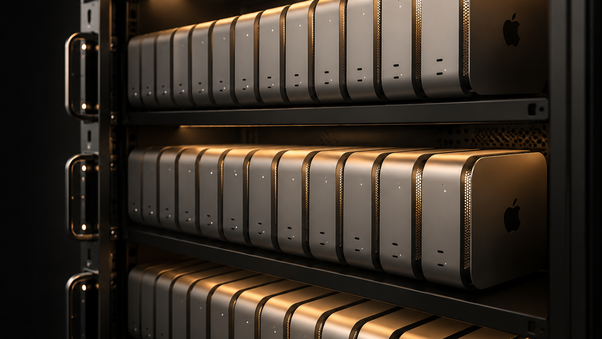
Apple Silicon opens up a new way for universities to build local AI computing power: Multiple Mac can be connected to form a powerful AI cluster – efficient, modular and without traditional GPU servers. Ideal for research, teaching and AI applications where data protection, energy efficiency and predictability are paramount.
Mac as an AI clusterWhat Apple Silicon makes possible
Apple Silicon Mac can now be used together as an AI computing system. Multiple devices work in parallel on AI workloads – without an external cloud and without dedicated GPU clusters.
- Multiple Mac work in parallel on AI workloads
- No external cloud, no dedicated GPU clusters required
- Existing Apple infrastructure can be used and expanded
This creates a local AI infrastructure that can be flexibly adapted to the requirements of universities.
Why Apple Silicon is relevant
for universities
Many universities face the same challenges: sensitive research data,
rising cloud costs and high energy consumption of traditional computing clusters.
Apple Silicon clusters offer a practical, data protection-compliant alternative.
Local AI instead of external cloud
- Sensitive research data that does not belong in the cloud
- Rising costs for cloud and GPU resources
- High energy consumption of traditional computing clusters
Data protection & data sovereignty
All data remains locally within the university. No cloud connection is required, and the solution supports compliance with Swiss data protection requirements.
Energy efficiency compared to GPU clusters
Apple Silicon Mac consume significantly less power in cluster operation than traditional GPU clusters. This reduces energy costs and enables quieter, more sustainable operation.
Modular design & scalability
Getting started requires only a few devices. The system can be flexibly expanded later – without a complete new purchase.
USE CASES
From LLMs to research data
Apple Silicon clusters are particularly well suited for local large language models, AI research, speech and text analysis as well as teaching and research environments with sensitive data.
Universities today use AI in a wide variety of areas – from large language models (LLMs) and natural language processing (NLP) to machine learning projects in research and teaching. Apple Silicon clusters create the foundation for a local AI infrastructure that enables models to be run in a data protection-compliant manner, research data to be processed and new applications to be developed. At the same time, costs, energy consumption and infrastructure requirements remain predictable.
- Local large language models (LLMs)
- AI research & prototyping
- Speech and text analysis
- Teaching & didactic AI applications
- Research environments with sensitive or protected data
The infrastructure is suitable for both smaller institutes and larger departments.
HAVE QUESTIONS
FAQ
Contact us with no obligation
We will show you how your university can make the most of Apple Silicon.
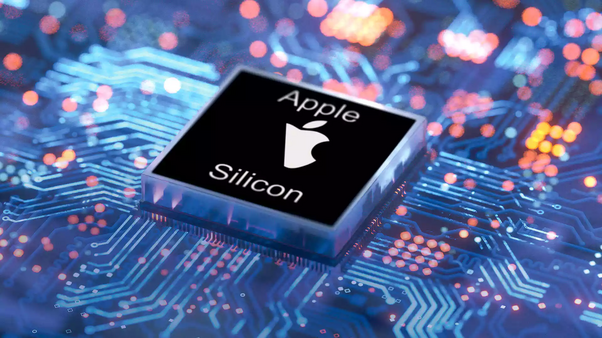
Mac mini & Mac Studio
The right hardware for AI clustering
Two proven device types are available for building an Apple Silicon cluster: Mac mini as a
compact, cost-effective entry point and Mac Studio for
maximum performance per cluster node.
COMPACT & SCALABLE
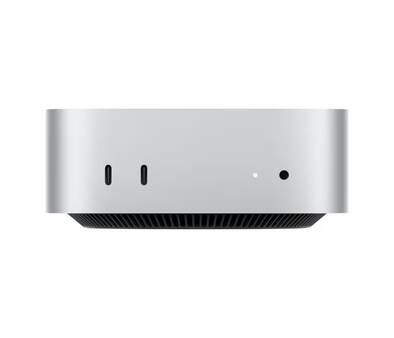
Mac mini
Ideal for getting started with local AI clusters. Perfect for universities looking to build AI computing power in an efficient, modular and cost-effective way.
Typical use cases
- Building initial cluster nodes
- Teaching and research environments
- Prototyping and exploratory AI projects
- Institutes with limited space or energy requirements
Why Mac mini?
- Excellent price-performance ratio
- Teaching and research environments
- Low power consumption
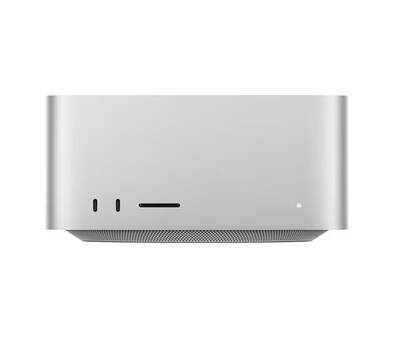
MAXIMUM PERFORMANCE PER NODE
Mac Studio
Perfect for demanding AI workloads or central cluster nodes. The right choice for universities that need to run compute-intensive research projects locally with maximum performance per node.
Typical use cases
- Larger local AI models
- Compute-intensive research projects
- Central AI servers within a cluster
- Departments with high parallelisation requirements
Why Mac Studio?
- Higher computing power per device
- Larger memory configurations
- Ideal as the core of a high-performance cluster
RECOMMENDED ACCESSORIES
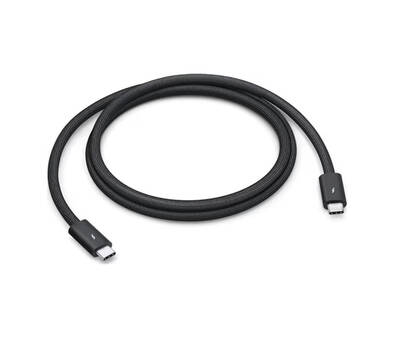
Thunderbolt Cable
For a stable connection between cluster devices, we recommend certified Thunderbolt cables. This ensures that your cluster operates permanently at full bandwidth and minimal latency.
Why this cable?
- Suitable for continuous operation
- Certified Thunderbolt performance
- Compatible with Apple Silicon clusters
Note: The selection of the appropriate cable length and type is tailored to your spatial requirements.
Did you know?
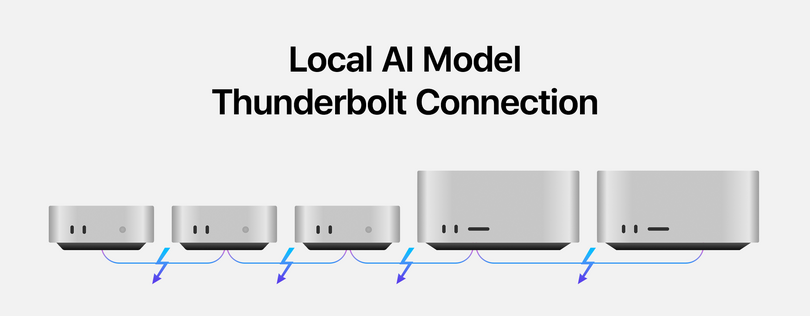
With the new macOS update (from version 26.2), Apple supports RDMA over Thunderbolt. This means Mac can not only be efficiently connected to one another, but can also exchange data with extremely low latency – ideal for AI clusters with high demands on data bandwidth and synchronisation.
THE COMPARISON
Apple Silicon vs. traditional GPU clusters
Apple Silicon Mac outperform traditional GPU clusters with significantly
lower power consumption (under 250 W per device instead of 400–800 W), simpler
configuration and seamless scalability.
Power consumption
Whilst traditional GPU clusters with NVIDIA cards or AMD processors quickly reach 400–800 W per device, a Mac Studio with M3 Ultra operates at less than 250 W per device even under demanding AI workloads. This significantly reduces energy costs and enables quieter, more sustainable operation.
Simpler configuration
Instead of complex setup processes as with Linux or Windows servers, an Apple Silicon cluster can be set up in just a few steps. The unified architecture of macOS, Core ML and Thunderbolt enables stable, predictable performance – entirely without specialised IT staff.
Seamless scalability
Mac can be expanded and combined with ease. Particularly with the new feature of using multiple Mac via Thunderbolt 5 as a single computing system, getting started with scalable LLM infrastructures has never been simpler.
Who is this solution for?
Apple Silicon clusters are suitable for universities, institutes and research institutions – wherever local AI computing power and data protection are essential.
- Artificial Intelligence & Data Science
- Computational Linguistics & Language Technology
- Neuroscience & Psychology
- Environmental & Sustainability Research
- Media Technology, Creative Coding & Design Research
- Education & Didactics Research
Your partner for Apple in the university sector
As an Apple Authorised Education Specialist, DQ Solutions supports Swiss universities with the procurement and coordination of suitable Apple hardware. From evaluation through to delivery.
✓ Education pricing, reliable availability and predictable delivery times
✓ Advice on device selection, quantities and phased procurement
✓ Scalable Apple hardware incl. certified accessories
✓ Central point of contact for universities in Switzerland
We understand the requirements of universities and support you from the initial evaluation through to procurement. Transparent, reliable and in partnership.
Get started with Apple Silicon at your university
We are happy to support you with the evaluation and procurement of suitable Apple hardware for research and teaching projects in the field of AI.
Solutions & Services for Universities
We support your university beyond the cluster.
Whether secure network architecture, structured procurement processes or integration into
existing IT landscapes: DQ Solutions supports universities holistically. Discover how
we can assist you beyond the hardware.
Procurement departments
IT procurement for universities and institutes.
With expert knowledge and tailored consulting, DQ Solutions supports universities in planning and implementing IT procurement projects. Every solution is precisely aligned with your institutional requirements, processes and budget.

Security for higher education
Protecting your digital assets and resources.
DQ Solutions helps universities safeguard their digital infrastructures, data and devices. Our security frameworks combine hardware and software solutions that are regularly updated, audited and aligned with the highest security standards.

Higher education
Tailor-made solutions for higher education. From design to IT infrastructure management, we support universities with digital solutions for modern teaching and future-oriented educational concepts.